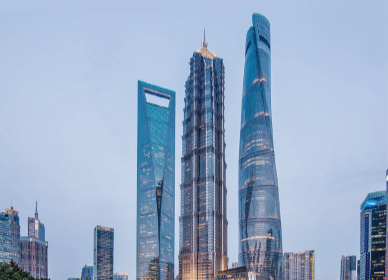
Today, super high-rise buildings, as landmark structures of cities, have become symbols of urban modernization. Admittedly, constructing super high-rises is no easy task. Due to their nature, they feature high costs, complex functions, and large occupant capacities, resulting in extremely high requirements for safety and security – far exceeding those of ordinary high-rise buildings. Take the Shanghai World Financial Center as an example. Back in 2008, as a landmark building in Shanghai, it became the tallest skyscraper in Shanghai at a height of 492 meters and was awarded "Best Tall Building Worldwide" by the Council on Tall Buildings and Urban Habitat (CTBUH). A decade later, in 2018, it received the "10 Year Award" at the 16th CTBUH Tall Building Awards.
Cable installation for such super high-rises imposes exceptionally high, even stringent, requirements on both product quality and installation solutions. Facing these challenges, Far East Cable Co., Ltd., a subsidiary of Far East Smarter Energy Co., Ltd. (Far East Energy, Stock Code: 600869), through continuous research and innovation, independently developed vertical suspension cables and fixtures for super high-rises. Successfully applied in the Shanghai World Financial Center, this achievement broke foreign technological monopolies and realized fully independent R&D, design, production and delivery. Having operated safely for 13 years to date, it stands as the best testament to the quality of Far East Cable's products for super high-rise projects.
High Construction Difficulty & Technological Gap
Cables are indispensable as the "blood vessels" of a building, providing a steady power supply. Their safety and stability are therefore critical. This is especially true for super high-rises like the Shanghai World Financial Center; any cable failure could lead to unimaginable consequences.
Super high-rises demand higher electrical design standards compared to ordinary high-rises. Narrow vertical shafts make cable installation extremely difficult, while heavy cables are prone to stretching during long vertical runs, compromising long-term safety – major pain points in cable design and construction. Meanwhile, core technology for super high-rise lifting cables was held by Japanese companies, leaving a technological gap in China's cable industry. At that time, the Japanese investor, Mori Building Co., Ltd., favored the technology of Fujikura Cable and planned to import 10kV lifting cables from Japan.
Overcoming Challenges & Breaking Monopolies Through Innovation
How did Far East Cable break this technological bottleneck and the Japanese monopoly? It relied on innovation and an indomitable spirit. Jiang Xipei, Founder, Chairman of the Board and Secretary of the Party Committee of Far East Holding Group, once vowed: "Landmark buildings standing on Chinese soil must use Chinese cables." Guided by this conviction, Far East's technical team broke through traditional lifting stress mechanisms, reduced cable weight, improved flexibility, and overcame numerous hurdles. They successfully developed vertical suspension cables and fixtures for super high-rises, passed full performance tests, and ultimately gained recognition from the investors and constructors of the Shanghai World Financial Center. The longest single cable measured 708 meters, weighed 14 tons, and was installed across underground horizontal, vertical, and high-level horizontal sections – a pioneering feat in domestic super high-rise construction at the time.
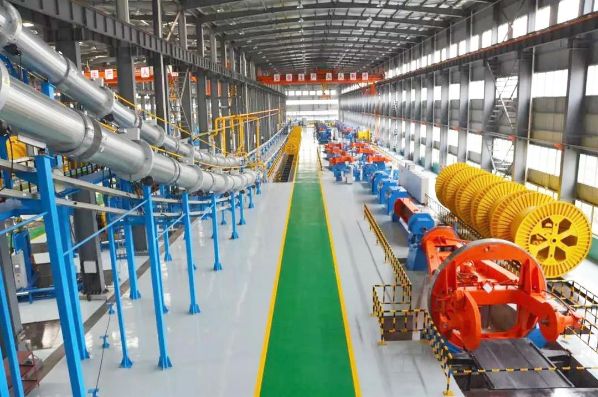
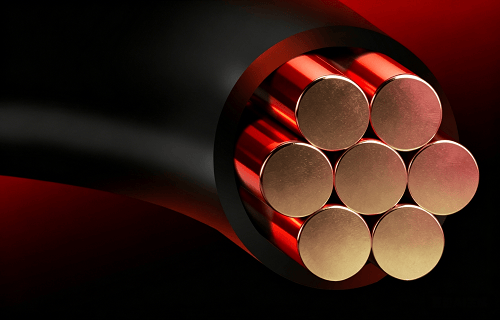
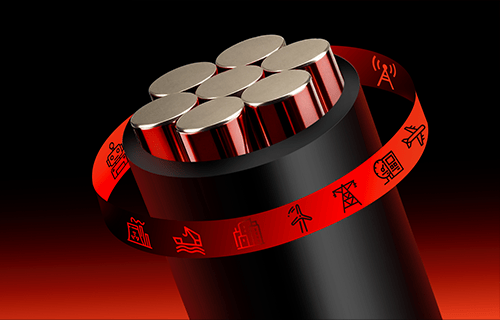
Compared with traditional steel-armored cables, Far East's vertical suspension cables for super high-rises increase current-carrying capacity by 10-30% and reduce weight by 20-30%. The seamless, joint-free design greatly enhances conductivity and safety. Furthermore, the vertical section incorporates a self-supporting unit with 3 steel wires and a lifting disc. During lifting and long-term operation, stress is borne by the steel wires and disc, enabling the cable to support its own weight regardless of length or load, effectively safeguarding the building's power supply system.
During installation, cables are suspended in shafts without cable trays, using dedicated fixtures for a compact, space-saving layout with reliable load-bearing capacity. This not only solves construction challenges but also cuts installation costs and improves overall economic efficiency. The cables adopt an eco-friendly design with excellent zero-halogen, flame-retardant, fire-resistant, low-smoke and low-heat-release properties, enabling safe, green, intelligent and economical power distribution for modern buildings.
Establishing Standards & Filling Industry Gaps
Innovation never stops. Through continuous exploration and R&D, Far East Cable has developed a complete set of installation specifications and edited the group standard "Vertical Suspension Cables and Fixtures for Super High-Rise Buildings" issued by the Architectural Society of China. This fills a critical standard gap in the industry, providing important guidance for the future development of super high-rises and ensuring the safe operation of numerous landmark projects, including China Zun.
Addressing the unique challenge of safely routing 12 cables in a 450mm-wide electrical shaft, Far East Cable set multiple "world firsts", including an 820-meter special 10kV high-voltage suspension cable and a dual-cable lifting fixture. A total of 24 suspension cables were installed, with an aggregate length of 15,132 meters and total weight of 136.38 tons, ensuring the safe operation of China Zun.

For years, Far East Cable has focused on the design, R&D, production and sales of intelligent cables for the construction industry. It actively supports the intelligent development of super high-rises, leads major transformations in super high-rise power supply systems, and contributes proprietary Far East technology and solutions to the advancement of the global super high-rise sector.


Tel:+86 400-882-6908

E-mail:87242500@600869.com

Address:No. 8, Yuandong Avenue, Yixing, Jiangsu, China