According to the latest data released by the National Energy Administration, China's total installed capacity of renewable energy reached 1.45 billion kilowatts in 2023, accounting for more than 50% of the nation's total installed power generation capacity, surpassing that of thermal power for the first time in history. As of December 31, 2023, China's annual power generation from renewable energy hit 3 trillion kilowatt-hours, accounting for about one-third of the total social electricity consumption. The combined power generation from wind and solar energy exceeded the residential electricity consumption in the same period, accounting for over 15% of the total social electricity use. Against this backdrop, promoting the rapid development of green and clean energy and advancing the transformation of the whole society's green energy consumption model has become a focal point of attention.

Notably, after participating in a number of "green super artery" projects, New Far East Cable has once again won the bid for the Gansu section of the Hami-Chongqing ±800kV UHVDC transmission line project, a UHV transmission channel where new energy accounts for more than 50% of the power generated. As one of the major projects under the national 14th Five-Year Plan, it is a key part of the "Xinjiang Power to Chongqing" initiative, playing a vital role in boosting the rapid development of clean energy such as wind and solar power in western China and improving energy efficiency.
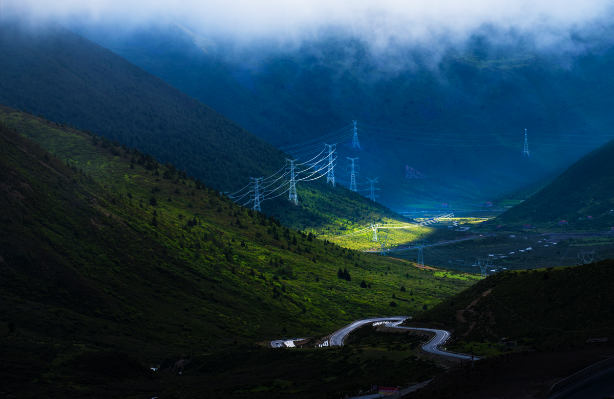
The Hami-Chongqing UHVDC transmission project is one of China's first batch of large-scale wind and solar power delivery projects for desert, Gobi and desertification regions. Starting in Hami City, Xinjiang, and terminating in Yubei District, Chongqing, the line passes through 5 provincial-level regions including Xinjiang, Gansu, Shaanxi, Sichuan and Chongqing, with a total length of 2,290 kilometers and a transmission capacity of 8 million kilowatts. Upon completion, the project will deliver over 36 billion kWh of electricity from Xinjiang to Chongqing annually, reducing carbon dioxide emissions by more than 16 million tons. Xinjiang will form three UHVDC transmission channels: Hami-Zhengzhou, Zhundong-Wannan, and Hami-Chongqing, continuously supplying power to central, eastern and southwestern China. This will effectively increase the share of green power in Chongqing, optimize the energy supply structure, and enhance the power grid's supply capacity.

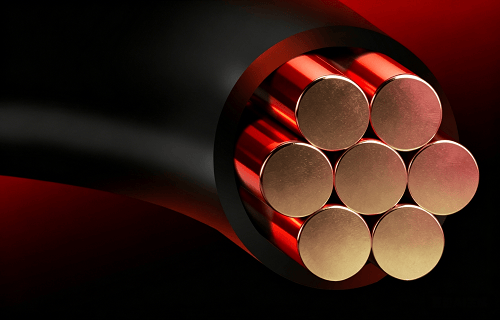
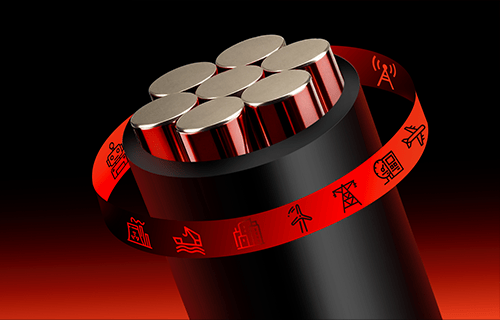
It is understood that the project faces challenges such as fragile ecological environments along the route, high altitude, low temperatures, low precipitation, and long sections of medium to strong corrosive foundations. The large-cross-section steel-core high-conductivity aluminum conductor supplied by Far East Cable features long transmission distance, large capacity, high transmission efficiency and low loss, adapting to complex conditions including heavy icing and long-span crossings. During power transmission, every 1% IACS increase in conductivity saves about 1,000-2,500 kWh of electricity per kilometer of line per year, equivalent to 0.33-0.83 tons of standard coal and reducing carbon dioxide emissions by 0.86-2.2 tons, empowering power transmission in mountainous areas and green low-carbon development.
Jiang Chengzhi, Secretary of the Party Committee, Executive Chairman of the Board, CEO and Industrial Chairman of Far East Holding Group, stated in an interview with the media: "Innovation is an inexhaustible driving force for enterprise development. Over the years, we have continued to focus on segmented sectors in market layout and cultivated leading products in the industry. UHV wires are one of our masterpieces."
The project is scheduled to be commissioned in the middle of 2025. Upon operation, it will be of great significance in promoting the rapid development of clean energy such as wind and solar power in western China and improving energy efficiency, making positive contributions to the national air pollution prevention plan and the achievement of the "Dual Carbon" goals.


Tel:+86 400-882-6908

E-mail:87242500@600869.com

Address:No. 8, Yuandong Avenue, Yixing, Jiangsu, China