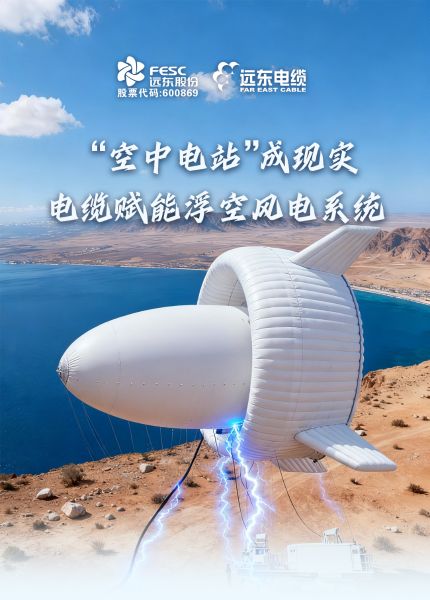
Recently, the world's first megawatt-class aerostat wind power system (Model S1500) successfully completed a test flight at the Naomaohu Base in Hami, Xinjiang. Unlike traditional high-tower wind turbines, this system mounts power generation equipment on an airship platform suspended at an altitude of 1,500 meters. By capturing stable and strong high-altitude wind energy, it achieves a single-unit power generation capacity of 1 megawatt, pioneering a new path for high-altitude wind energy utilization.
Its core principle is "high-altitude tethered power generation": a helium airship serves as the suspension carrier, connected to a ground mooring device via a high-performance tethered cable. After the system autonomously ascends to the predetermined height, the persistent high-altitude wind drives the onboard wind turbines, and the generated electricity is transmitted to the ground power grid through the built-in power transmission unit inside the tethered cable. This design breaks through the "height bottleneck" of traditional wind power, and is especially suitable for scenarios difficult to cover by conventional turbines such as deep seas and complex mountainous areas, expanding a brand-new dimension for global clean energy development.
Behind this unconventional system breakthrough lies a seemingly basic yet critical component supporting the entire operation – the 2-kilometer-long tethered power cable connecting the airship to the ground. This cable undertakes the core task of safely and stably transmitting 1 megawatt of power from 1,500 meters high to the ground, with technical difficulty far exceeding conventional cables: no joints are allowed along the entire 2-kilometer length; it must bear its own gravity and complex environmental tension while minimizing weight; and it must maintain long-term reliable operation under high-voltage direct current transmission conditions.
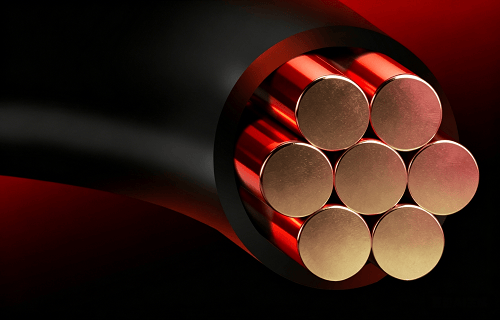
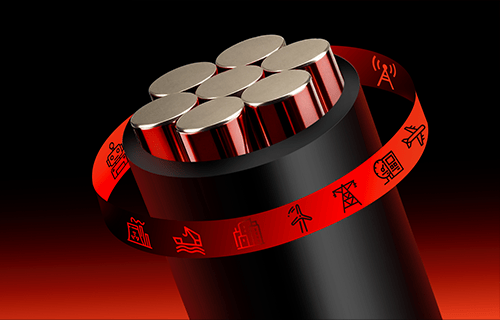
The project adopts a special tethered cable developed by Far East Cable, marking the first application of such a product in the cable industry for this field. The cable adopts a composite design of two 10kV DC cables, and through an original high-strength support structure and lightweight conductor solution, the weight per meter is successfully controlled at 0.21 kg while ensuring power transmission performance, reducing the overall cable weight by more than 30% compared with conventional solutions. This balance of "both strength and lightweight" precisely embodies the true essence of high-end intelligent manufacturing – not simple material stacking, but precise innovation based on in-depth application scenarios.
Far East has long anchored R&D resources at the intersection of national strategies and industrial frontiers. In this world's first megawatt-class aerostat wind power system, the successfully supporting tethered cable is not only the first successful application in the cable industry for this field, but also directly transforms the technical accumulation of solving extreme engineering problems into "new quality productivity" driving the implementation of cutting-edge global projects.

Tel:+86 400-882-6908

E-mail:87242500@600869.com

Address:No. 8, Yuandong Avenue, Yixing, Jiangsu, China