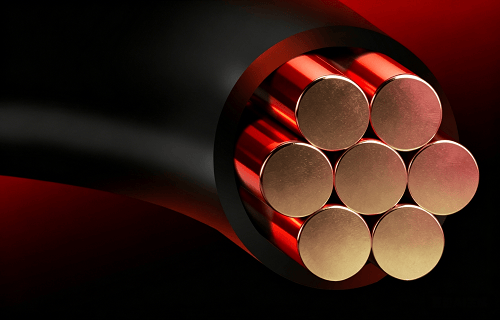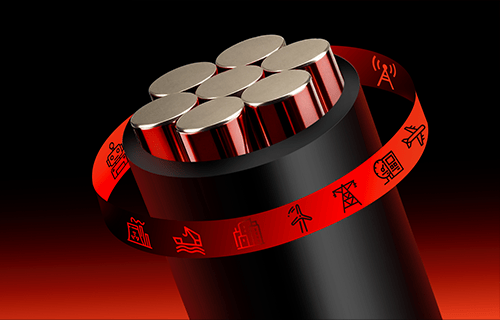
As high-speed coherent optical communications rapidly evolve toward 400G, 800G, and 1.6T, FAU (Fiber Array Unit) — a critical interconnect component in silicon photonic modules — faces a significant challenge: standard single-mode fibers are highly susceptible to environmental vibrations, temperature fluctuations, and mechanical bending. These factors cause random polarization drifts, leading to modal crosstalk, increased signal loss, and higher bit error rates, severely compromising the stability and reliability of high-speed optical modules. This has become a key bottleneck for high-speed interconnect in AIDC applications.
To address FAU polarization control challenges, the industry has turned to polarization-maintaining fiber (PMF). By leveraging a specially designed structure to lock the polarization state, PMF effectively resists environmental interference, ensuring stable polarization transmission. Currently, the market is dominated by overseas suppliers, but their offerings are often limited by high costs, poor compatibility, weak bending resistance, and long lead times — failing to meet the demands of China’s high-speed optical module industry for large-scale, low-cost, and highly integrated solutions.

Far East Communication PMF SEM Image
Far East Communications directly tackles these pain points with its high-performance Panda-type polarization-maintaining fiber, delivering critical polarization stability for FAU and high-speed coherent communications. Key advantages include:
1.High Birefringence
A specially designed stress region introduces high birefringence, separating fast and slow axes and precisely locking the polarization direction. This ensures industry-leading polarization retention, fundamentally suppressing polarization drift.
2.Strong Environmental Immunity
Effectively resists external disturbances such as vibration, temperature changes, and mechanical deformation, maintaining stable polarization under complex operating conditions and ensuring long-term FAU reliability.
3.Low Modal Crosstalk
Suppresses mode coupling and crosstalk, preserving signal integrity and high purity within FAU, supporting high-order modulation formats and enabling low-BER coherent communications.
To better align with AIDC application scenarios, Far East Communications has also achieved several technical breakthroughs in fiber design and fabrication:
1.FAU-Specific Tailored Design
Customized for FAU internal interconnects in 400G/800G/1.6T coherent optical modules, perfectly compatible with silicon photonic integration schemes, ensuring stable polarization transmission.
2.Full-Chain Process Excellence
Leveraging jointly developed next-generation plasma deposition technology combined with high-precision CNC drilling, the fiber achieves low attenuation and high uniformity — building a solid physical foundation for low-BER high-speed coherent communications.
3Superior Bending Resistance
The next-generation design supports extremely tight bending radii, ideal for compact routing within optical modules, with stable polarization performance maintained even under bending.
With its mature Panda-type PMF design and proven large-scale production capability, Far East Communications’s polarization-maintaining fiber strikes an optimal balance between FAU polarization control and high integration. It offers a highly reliable and cost-effective domestic polarization solution for high-end applications such as AI data centers and high-speed coherent communications, powering efficient and stable transmission in the era of all-optical interconnect.


Tel:+86 400-882-6908

E-mail:87242500@600869.com

Address:No. 8, Yuandong Avenue, Yixing, Jiangsu, China